91 7065006006
 Student Login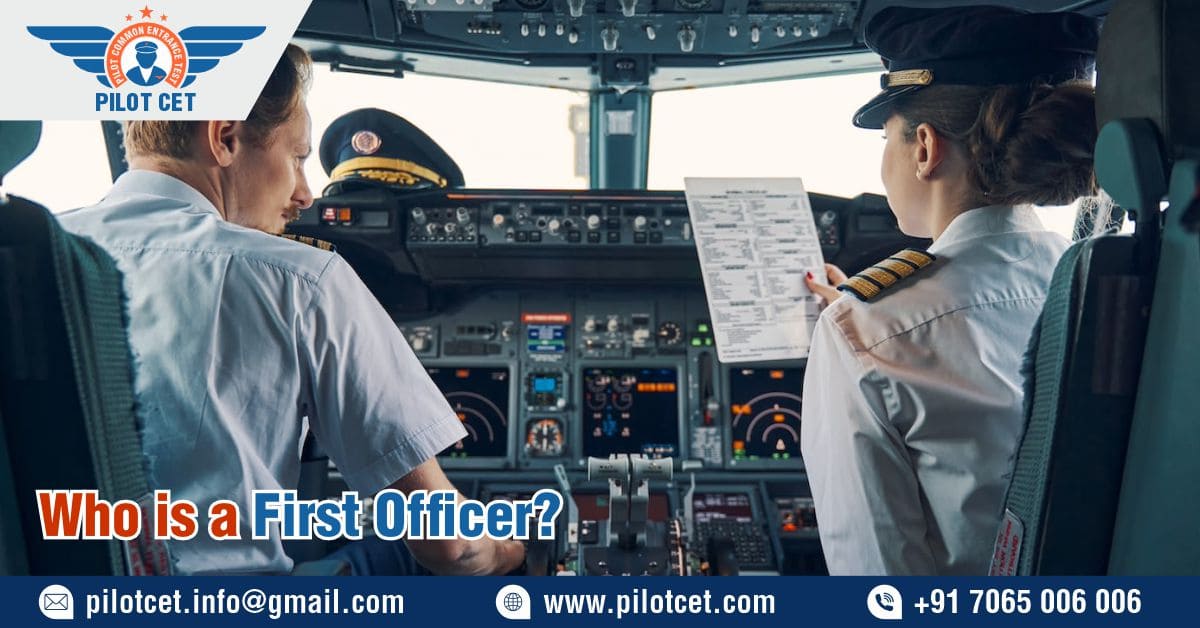
Who Is a First Officer?
Posted on : 1 December, 2025 01:30 pm
After getting the CPL license candidates often start their career as a First Officer, also known as a co-pilot. First officer is a trained commercial pilot who works with the Captain to fly the aircraft safely and also ensures the safe flight operations. First officers usually sit in the right seat of the cockpit beside the captain and they also share major responsibilities during every flight operation. The cockpit hierarchy is structured such that the Captain is the head of the cockpit but the first officer is the second in command and equally essential in the operating of the flight.
The First Officer helps with flying, navigation, communication and safety checks which makes their work as important as a captain who also assist for smooth and safe operations. The main difference between a Captain and a First Officer is authority where the Captain makes the final decisions, while on the other hand First Officer supports and assists in all flight duties. However, both pilots works together as a team to ensure passengers reach their destination safely.
Key Roles and Responsibilities
First Officers handle multiple responsibilities during the flight operations and they plays an important role in helping the Captain operate the aircraft safely and efficiently. Below is given some of the main responsibilities of FO:
| Responsibility | Explanation |
|---|---|
| Operating the Aircraft | Helps the Captain fly during takeoff, landing and cruise. |
| Monitoring Flight Systems | Checks instruments, fuel, weather and engine performance. |
| Communication with ATC | Talks to Air Traffic Control and follows their instructions. |
| Navigation and Flight Planning | Assists in route planning, fuel calculation and weather checks. |
| Managing Checklists and SOPs | Completes safety checklists and follows standard procedures. |
| Ensuring Passenger Safety | Coordinates with cabin crew and ensures all safety checks. |
| Supporting the Captain in Emergencies | Helps the Captain handle emergency procedures calmly. |
Skills Required
- Communication & Decision-Making: Clear communication and quick decision making is necessary as pilot have to communicate with the ATC and handle the emergency situations.
- Leadership & Teamwork: Pilots leads the crew and working staff so it is essential for him to maintain the teamwork so the journey will complete smoothly.
- Technical Knowledge: He should have great understanding of aircraft systems and navigation etc.
- Emotional Stability: Staying calm under pressure is important in any situation.
- Attention to Detail: Pilots have to be very attentive & follow the safety protocols.
- Situational Awareness: Staying focused and monitoring environment and aircraft status to prevent any emergencies.
- Problem-Solving: Pilot must be good at solving problems & handling emergencies efficiently.
- Adaptability: He should be adjusting to changing conditions.
- Time Management: Managing flights and schedules efficiently.
Step-by-Step Guide to become a First Officer
- Step 1: Complete 10+2 with PCM: The very first step is to qualify Class 12 with Physics, chemistry and Mathematics because these subjects are required for pilot training and DGCA eligibility.
- Step 2: Class 1 Medical: Candidates must be physically fit for flying so that you have to get a Class 1 Medical Certificate from a DGCA-approved doctor to prove you are physically and mentally fit to become a commercial pilot.
- Step 3: Entrance Exam: Candidates can appear for the scholarship based entrance exams like Pilot CET & AME CET to avail admissions in top FTOs and scholarships.
- Step 4: Pilot Training + Exams: Join a flying school, complete ground classes and clear DGCA exams while learning the basics of commercial flying.
- Step 5: CPL (Commercial Pilot License): Finish the required 200 hours flying hours as per DGCA, pass skill tests and then receive your Commercial Pilot License.
- Step 6: Type Rating (A320/B737 etc.): After CPL, students have to train on a specific aircraft model like Airbus A320 or Boeing B737 etc. This is a mandatory certificate which prepares and helps you to fly that aircraft professionally.
- Step 7: Airline Selection & Training: After completing rating then you can apply to airlines, clear interviews and simulator tests and complete their internal training programs.
- Step 8: Join as Junior First Officer: After airline training you can start your career as a Junior First Officer and begin flying with a Captain.
Salary In India
The salary of a First Officer in India varies depending on the airline, aircraft type and flying hours. Major Indian airlines offer competitive monthly pay along with allowances and benefits. Below is a quick comparison of the approximate monthly salary offered by top operational airlines in India.
| Airline | Approx. Monthly Salary (INR) |
|---|---|
| IndiGo | 2.0 - 3.5 lakh |
| Air India | 2.5 - 3.5 lakh |
| Akasa Air | 1.8 - 2.5 lakh |
| SpiceJet | 1.5 - 2.0 lakh |
| AirAsia India | 1.8 - 2.5 lakh |
Top International FO Salaries
First Officers working with international airlines earn significantly higher salaries compared to Indian carriers. The pay depends on the airline, aircraft type, experience and allowances as well. The table below shows the approximate monthly salary for First Officers at the top-paying global airlines.
| Airline | Approx. Monthly Salary (INR) |
|---|---|
| Qantas | 7 - 11 lakh |
| Emirates | 6.5 - 10+ lakh |
| Cathay Pacific | 6 - 9 lakh |
| Qatar Airways | 6 - 9 lakh |
| Etihad Airways | 6 - 8.5 lakh |
| Singapore Airlines | 5 - 7 lakh |
Career Growth Path for a First Officer
- Junior First Officer - Begins flying with supervision where the individual experiences and accumulates the flight hours.
- First Officer - Plays the role of co-pilot during normal flights, shares with the Captain flying responsibility.
- Senior First Officer - Accurate co-pilot, can be used in more intricate routes and help with the decision-making process.
- Captain - Works as a Pilot in command makes final decisions, responsible for safety, navigation, and crew management.
- Check Captain / Training Captain- Experienced Captain that evaluates and trains other pilots.
- Instructor / Examiner - Carries out simulator training, flight checks and licensing of new pilots.
- Line Captain Mentor - Leads junior pilots, advises on career-related and operation-related choices.
Why Choose a Career as a First Officer
- High Salary Potential - Attractive pay in India and abroad with growth over time.
- Travel Opportunities - Fly to domestic and international destinations regularly.
- Dynamic and Respected Job - Exciting, challenging, and highly respected profession.
- Long-Term Growth - Clear career path from Junior First Officer → Captain → Instructor/Examiner.
- Work-Life Flexibility - Rotational schedules allow time off between flights.
- Global Career Opportunities - Skills are transferable, making it easy to work with international airlines.
If you are someone who is highly interested toward commercial flying as a career then you are on the right path because this career offers strong growth, high salaries and exciting travel opportunities. Aspiring pilots can secure their professional dreams of flying easily with dedication and proper training. It is a prestigious and rewarding profession to people who love the aviation industry.